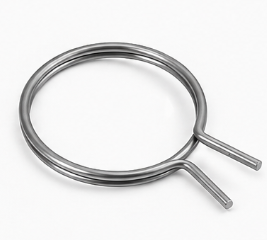
High-strength steel springs can absorb hydrogen during acid cleaning and electroplating. Normal appearance and initial load do not prove immunity from delayed fracture under assembly stress.
Risk comes from a combination
Higher material strength, residual stress and tensile loading generally demand more caution. Pretreatment, plating exposure and geometry also affect susceptibility.
Failure may be delayed
Hydrogen-assisted cracking can develop under sustained load, so dimensional or one-time static checks do not cover the risk. Failure can appear sudden and brittle.
Baking is a controlled process
Embrittlement-relief baking must be coordinated with plating and controlled for timing and temperature. Suitability and validation require material and finishing review.
Discuss alternatives during design
Consider non-electrolytic coatings, another substrate, stainless steel or lower-stress geometry. Safety-related parts should include material, finish and sustained-load validation in approval.
References
This article is informed by public standards catalogues and industry engineering resources. Project values should be confirmed by drawings, material certificates and sample validation.