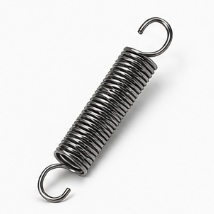
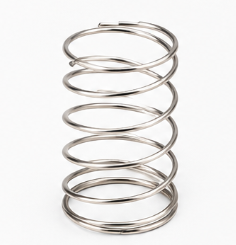
DESIGN WINDOWTypical capability range
Use these values for early selection. Final dimensions, tolerances and loads are confirmed by engineering review and approved samples.
- Wire Dia
- 0.1-15mm
- OD
- 1-150mm
- Free Length
- 5-1000mm
- Typical use
- Suitable for appliances, toys, sports equipment, automation industries
ENGINEERING OPTIONS
Materials, forms and quality controls
01Material options
- Music wire: high strength and cyclic room-temperature use
- SUS304 / SUS316: humid or corrosive environments
- 65Mn: general industrial tension and return mechanisms
02Forms and processes
- Machine, crossover, side and extended hooks
- Custom hook angle, opening direction and length
- Controlled initial tension, free length and load at length
03Critical inspection
- Free length, body diameter and hook orientation
- Load at specified length and initial tension
- Hook-root surface, fatigue life and permanent set
APPLICATION FIT
Typical applications
Precision extension springs with various loop types, suitable for appliances and toys
01Automation return
Fixtures, rods, guards and position-return mechanisms.
02Sports and appliances
Fitness equipment, doors, toys and household products.
03Latching and tensioning
Latches, drive tensioners and compact linkages.
DESIGN NOTESEngineering notes
Hooks usually create higher stress concentration than the spring body. Avoid side pull and align cyclic load with the spring axis where possible.
Specify initial tension or the first load point when assembly feel matters. Visually closed coils do not completely define performance.
RFQ CHECKLISTInclude with your RFQ
- 01 Wire, body diameter and free length
- 02 Hook geometry and relative orientation
- 03 Working lengths and loads
- 04 Maximum extension and life target
- 05 Material, finish and volume
Request Engineering Review → FAQ
Common design questions
Can the two hooks use different directions? +
Yes. Show viewing direction, openings and relative angle, and include mating-pin dimensions.
Can an extension spring work at its maximum hook travel? +
The geometric limit should not be a routine working point. Maximum extension must be reviewed against stress and cycle life.