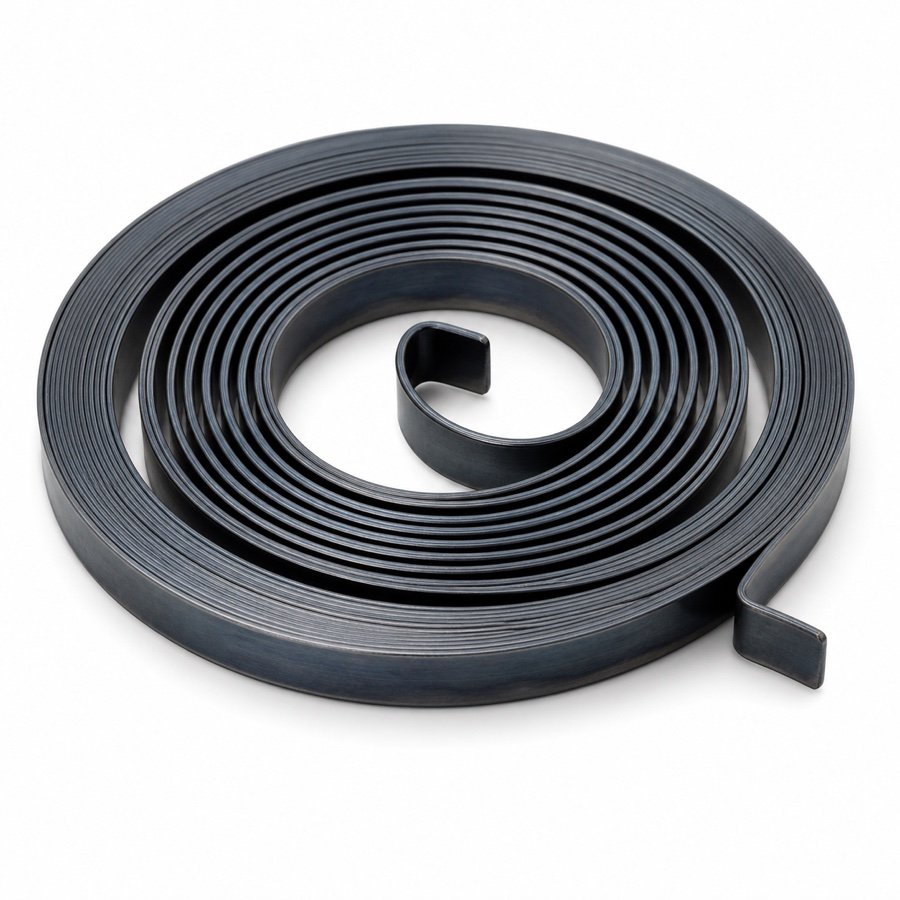
Power springs support rewind, timing and return mechanisms. Outside diameter and strip thickness alone do not define energy, torque curve or life.
Start with the torque curve
State starting, working and maximum torque with allowed variation. If feel matters, provide torque at several angles or turns.
Define direction and turns
Show viewing direction, winding hand, prewind, useful turns and limits to prevent reverse loading after assembly.
Attachments are high-risk locations
Arbor slots, rivets, hooks and case anchors create local stress and wear. Include geometry, radii and fit in the life review.
Test in the real arbor and case
Arbor diameter, side guidance, lubrication and housing friction change torque. Use representative mounting for validation.
References
This article is informed by public standards catalogues and industry engineering resources. Project values should be confirmed by drawings, material certificates and sample validation.