DESIGN WINDOWTypical capability range
Use these values for early selection. Final dimensions, tolerances and loads are confirmed by engineering review and approved samples.
- Form
- Flat spiral
- Hand
- Left/right
- Output torque
- Custom
- Typical use
- For cable reels, timers, blinds, toys and automatic return mechanisms
ENGINEERING OPTIONS
Materials, forms and quality controls
01Material options
- High-carbon strip: conventional rewind and storage
- Stainless strip: humid or corrosion-resistant service
- Special alloy strip: reviewed for temperature, life and torque
02Forms and processes
- S-shaped, natural-coil and prestressed forms
- Left / right hand and different prewind
- Arbor slots, outer hooks and case anchors
03Critical inspection
- Strip thickness, width and edge condition
- Output torque at multiple turns
- Useful turns, life and attachment wear
APPLICATION FIT
Typical applications
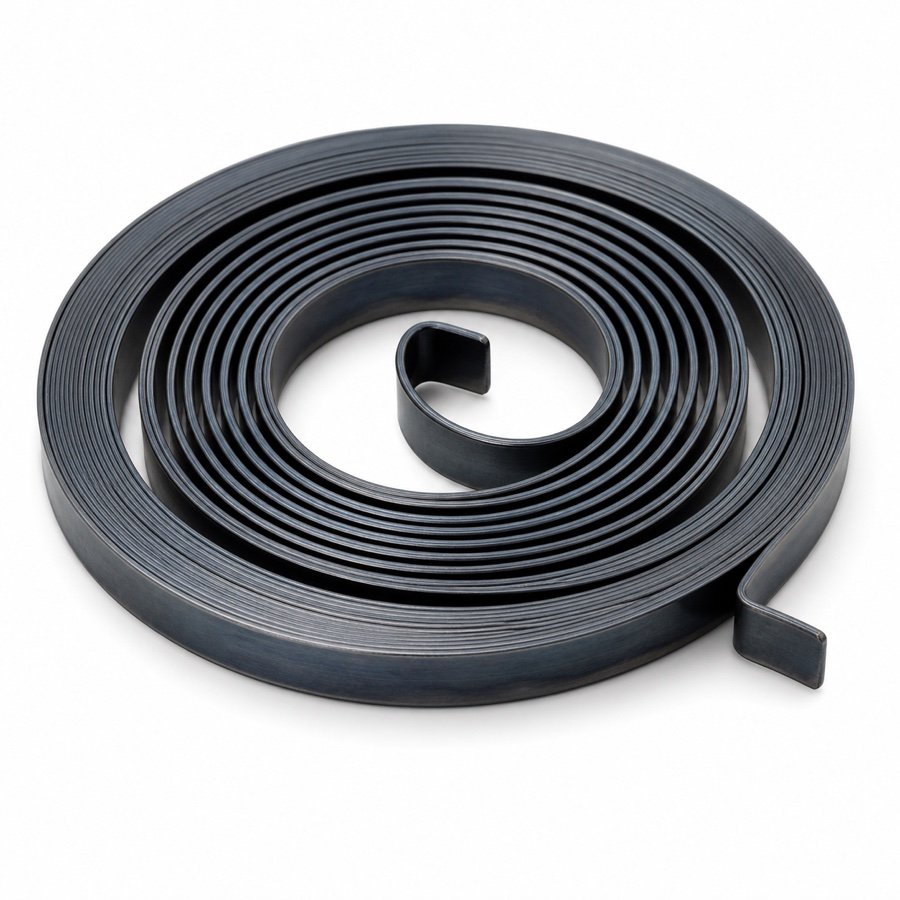
Flat spiral springs that store and release torque for rewind and return mechanisms
01Automatic rewind
Cable reels, tapes, blinds and belt mechanisms.
02Timing and drive
Timers, toys and compact stored-energy systems.
03Consistent return
Covers, displays and auto-return mechanisms.
DESIGN NOTESEngineering notes
Arbor diameter, case side clearance and friction change the torque curve, so validate samples in representative hardware.
Attachments see local bending and wear. Avoid sharp corners and record attachment failure locations during life testing.
RFQ CHECKLISTInclude with your RFQ
- 01 Housing and arbor dimensions
- 02 Viewing direction, hand and prewind
- 03 Working turns and torque points
- 04 Inner / outer attachments
- 05 Life, lubrication, temperature and volume
Request Engineering Review → FAQ
Common design questions
Can a power spring produce perfectly constant torque? +
The working curve can be optimized, but material, winding state and friction remain. Define allowed torque at multiple turns.
Why provide arbor and housing dimensions? +
The arbor controls minimum curvature and the housing limits expansion, affecting torque, friction and life.