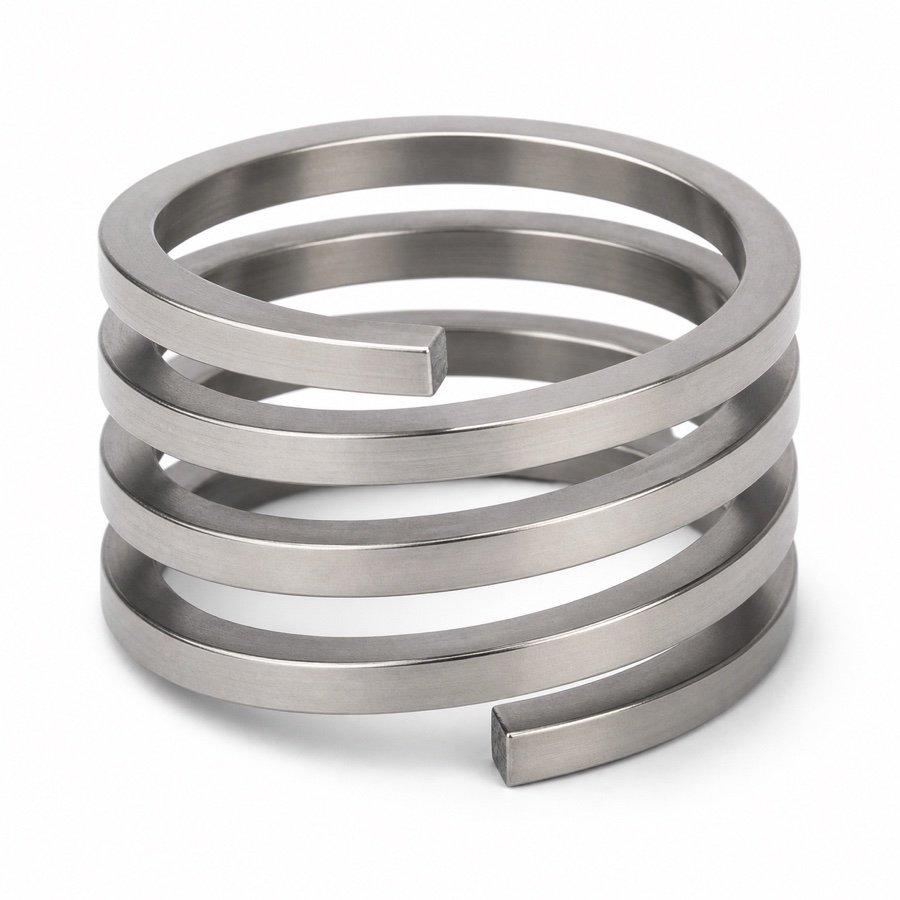
Square or flat wire is not simply round wire pressed flat. Width-to-thickness ratio and orientation affect bending, stress, contact area, friction and springback.
Define section orientation
Show how width and thickness relate to the spring axis or bend plane. Section twist during forming changes load and appearance.
Corner radius is functional
Corner radii affect stress concentration, fit and coating coverage. Width and thickness alone may not define a critical section.
Material condition affects forming
Rolling direction, hardness, edge quality and surface defects influence tight bends and fatigue. Profile-wire lead time also needs early review.
Inspect section and load
In addition to shape and force, check orientation, twist, edge damage and contact with mating surfaces at critical locations.
References
This article is informed by public standards catalogues and industry engineering resources. Project values should be confirmed by drawings, material certificates and sample validation.