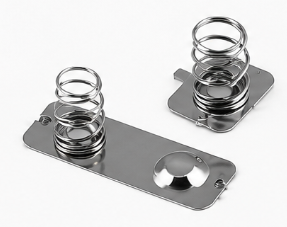
Battery springs should not be judged only by free length and force. Contact resistance, temperature rise, corrosion, insertion wear and long-term relaxation affect device reliability.
The material has two jobs
Copper alloys generally conduct better than common steels, but strength, elasticity and cost differ. Steel with plating also requires assessment of corrosion after coating wear.
Keep contact force in a window
Too little force risks vibration interruption and unstable films; too much force increases assembly load, plastic stress and wear. Balance electrical and mechanical needs.
Co-design plating and substrate
Nickel, tin and other finish systems influence soldering, wear, contact stability and cost. Specify the mating metal, current and environment.
Useful validation
Beyond dimensions and load, projects may test contact resistance, temperature rise, vibration, insertion cycles, damp heat and salt exposure while examining the wear track.
References
This article is informed by public standards catalogues and industry engineering resources. Project values should be confirmed by drawings, material certificates and sample validation.