DESIGN WINDOWTypical capability range
Use these values for early selection. Final dimensions, tolerances and loads are confirmed by engineering review and approved samples.
- Specification
- Drawing/sample based
- Form
- 2D/3D
- Material
- Carbon/stainless steel
- Typical use
- For automotive components, electronics, furniture hardware and sports equipment
ENGINEERING OPTIONS
Materials, forms and quality controls
01Material options
- Carbon and music wire: high-strength elastic forms
- SUS304 / SUS316: corrosion-resistant forms
- Copper alloys and special wire: conductive or special function
02Forms and processes
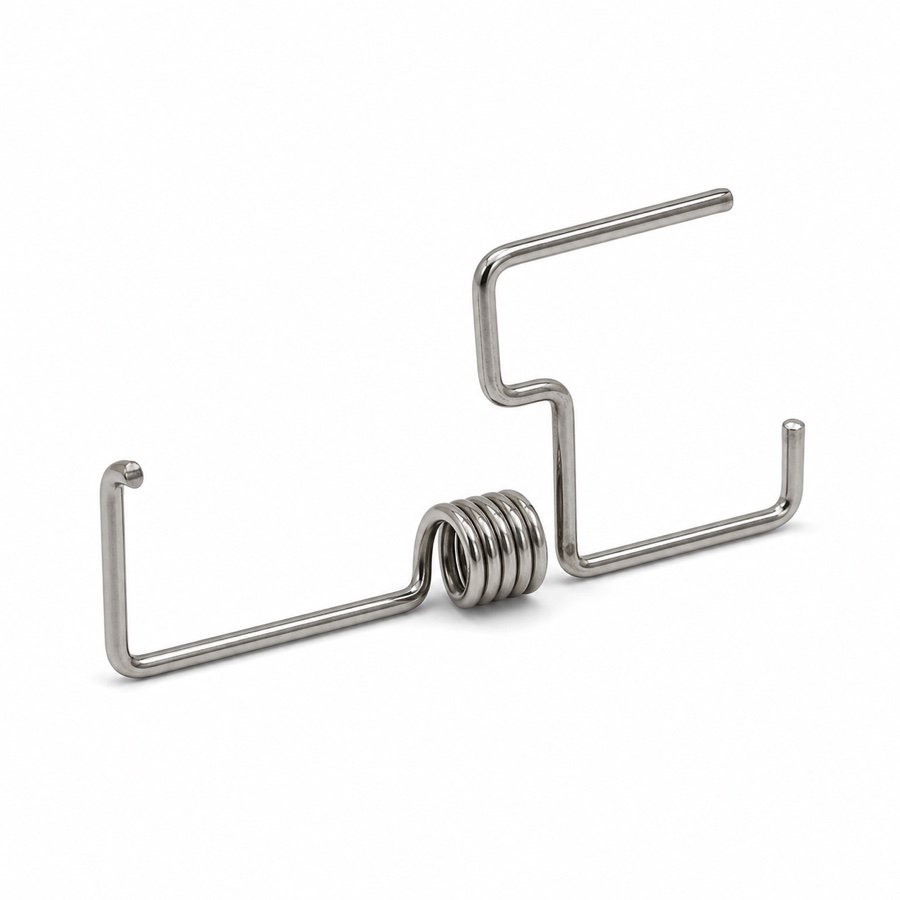
- 2D and 3D spatial bends
- Clips, pins, brackets, links and elastic arms
- Round, square, flat and locally formed ends
03Critical inspection
- Datum to critical bend positions
- Angles, profile, flatness and assembly function
- Material, heat treatment and finish traceability
APPLICATION FIT
Typical applications
Complex wire forms made to drawings or samples for positioning, support and linkage mechanisms
01Position and connection
Clips, pins, brackets and automated assembly parts.
02Automotive and furniture
Seats, latches, supports and hardware.
03Electronics and sports
Elastic clamping, drive and structural links.
DESIGN NOTESEngineering notes
Wire forms are flexible parts. Use real mounting features as inspection datums; arbitrary outline dimensions may not represent assembly.
Long arms and open shapes can distort in heat treatment, finishing and bulk shipping, so handling and packaging need production approval.
RFQ CHECKLISTInclude with your RFQ
- 01 Datum-based dimensioned 2D drawing
- 02 STEP / IGES 3D model
- 03 Keep-out zones and mating dimensions
- 04 Bend radius, material and finish
- 05 Functional gauge, packaging and volume
Request Engineering Review → FAQ
Common design questions
Is a 2D drawing needed with a 3D model? +
Recommended. The model defines shape; the drawing defines material, datums, tolerances, finish and inspection.
Can you reproduce from a sample? +
It can be evaluated, but a sample may be distorted or lack material data. Create a controlled drawing and acceptance standard before production.