DESIGN WINDOWTypical capability range
Use these values for early selection. Final dimensions, tolerances and loads are confirmed by engineering review and approved samples.
- Wire Dia
- 0.2-5mm
- OD
- 3-50mm
- Free Length
- 2-60mm
- Typical use
- Suitable for battery compartments, electronic devices, remote controls
ENGINEERING OPTIONS
Materials, forms and quality controls
01Material options
- Phosphor bronze: balanced conduction, forming and contact stability
- Stainless steel: corrosion-resistant elasticity with reviewed current path
- Plated carbon steel: cost and conductive surface balance
02Forms and processes
- Conical, cylindrical, leaf and custom contacts
- Solder legs, clips, pins and PCB mounts
- Nickel, tin and other finishes selected by project
03Critical inspection
- Contact height, travel and load
- Contact resistance, temperature rise and finish appearance
- Insertion, vibration, damp heat and salt testing
APPLICATION FIT
Typical applications
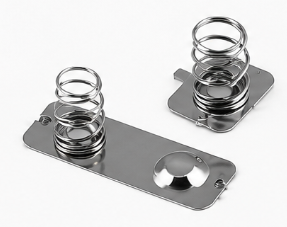
Excellent conductivity battery springs, suitable for battery compartments and electronics
01Battery bays
Consumer electronics, controls, toys and portable devices.
02Charging contacts
Docks, fixtures and compact power connections.
03Conductive return
Switches, PCB contacts and sensor assemblies.
DESIGN NOTESEngineering notes
Low force risks intermittent contact; excessive force adds housing stress and wear. Use an assembly tolerance stack to define the window.
Select plating for mating metal, joining, wear and environment rather than color or salt hours alone.
RFQ CHECKLISTInclude with your RFQ
- 01 Battery / mating contact and tolerances
- 02 Minimum / maximum travel and force
- 03 Current, temperature rise and contact resistance
- 04 Substrate, plating and joining
- 05 Vibration, humidity, salt and insertion cycles
Request Engineering Review → FAQ
Common design questions
Must a battery spring be copper alloy? +
No. Copper alloys or plated steel can be selected from conductivity, strength, cost and environment, then verified by resistance and temperature rise.
Why test in the final device? +
Housing, battery tolerance, vibration and contact surfaces change effective travel and electrical stability.