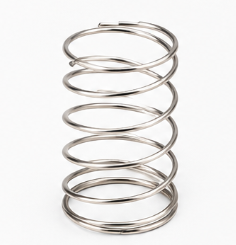
Spring index is commonly expressed as mean coil diameter divided by wire diameter. It is not a standalone acceptance rule, but it quickly highlights forming, stress-correction and stability concerns.
When the index is low
Wire must wrap around a tighter radius, increasing forming springback, tooling load and strain variation across the wire. Material condition, machine capability and tolerances deserve closer review.
When the index is high
Thin wire around a large diameter produces a flexible spring that is more vulnerable to distortion during handling, heat treatment or operation. Long parts may require guidance.
Do not change one dimension in isolation
Changing mean diameter affects the package, while changing wire diameter strongly affects rate and stress. Recalculate load, coils, free length and material together.
Review manufacturability before sampling
For extreme indices, tight tolerances or long-life requirements, complete a manufacturing review before tooling and verify diameter, load and end quality on samples.
References
This article is informed by public standards catalogues and industry engineering resources. Project values should be confirmed by drawings, material certificates and sample validation.