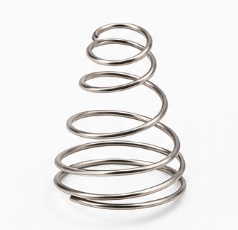
Conical springs suit limited packages, low solid height or a particular load curve, but a tapered shape alone does not guarantee clean telescoping.
Decide whether telescoping is required
For low solid height, adjacent coil diameters and wire size must permit nesting with manufacturing and finish tolerances.
The load curve may be nonlinear
As coils contact or become inactive, working rate can change. Use several load points to describe the useful range.
Large and small ends control mounting
End diameters, supports and guidance should prevent reversal and eccentricity. Battery uses also need an electrical path and contact area.
Observe the nesting sequence
Record coil contact, rub and offset through compression, then measure load and free-height change after repeated cycles.
References
This article is informed by public standards catalogues and industry engineering resources. Project values should be confirmed by drawings, material certificates and sample validation.