Spring pricing depends on more than material weight. Forming complexity, tolerances, inspection, volume and packaging can change the production route. A complete drawing speeds quotation and defines sample acceptance.
Geometry and datums
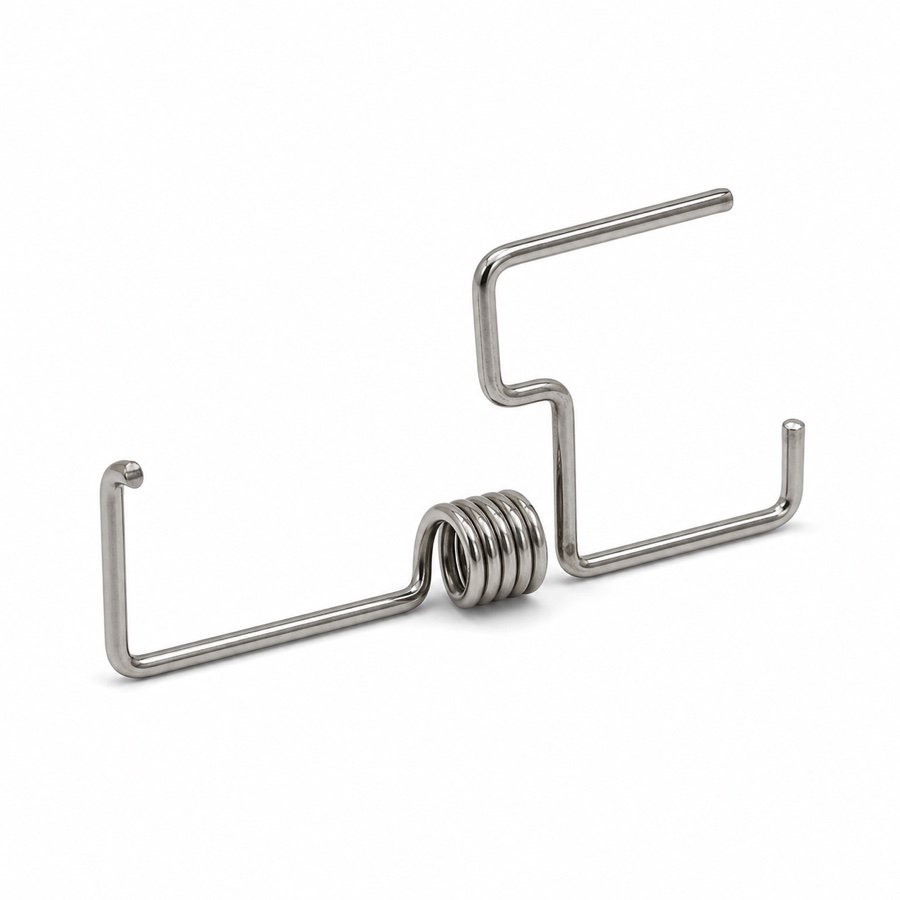
Compression spring drawings usually define wire diameter, outside or mean diameter, free length, total and active coils, and end type. Extension springs add hook geometry and initial tension. Torsion springs require hand, leg length, angle and working direction.
For complex wire forms, define datums, critical bend radii and keep-out zones. A dimensioned PDF plus a STEP or IGES model is especially useful.
Load points beat vague force descriptions
Provide at least one target load at a working height or angle. Two load points help define the required rate. Include maximum travel, solid-height constraints, preload and target cycle count.
Match tolerances to assembly risk
Apply specific tolerances to critical dimensions instead of tightening every dimension. Unnecessarily narrow tolerances add setting, inspection and sorting cost without always improving assembly performance.
Commercial details affect the process
Include sample quantity, monthly or annual volume, target lead time, packaging and any material certificate or inspection report requirement. Use revision numbers for repeat orders to prevent drawing mix-ups.