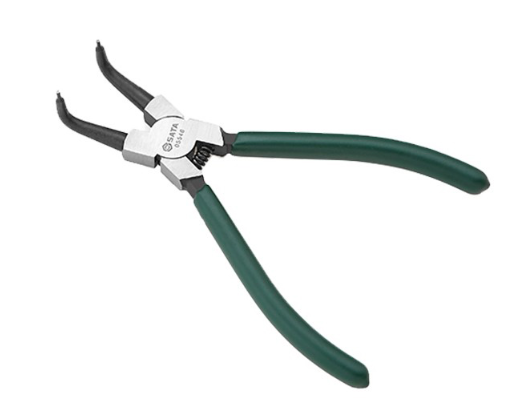
Assembly tools Snap Ring Pliers For installing and removing shaft or bore retaining rings. Select internal / external action, straight / bent tips and tip diameter from access and ring geometry.
Shaft / hole Precise fit Anti-rust
DESIGN WINDOW Typical capability range Use these values for early selection. Final dimensions, tolerances and loads are confirmed by engineering review and approved samples.
Type Shaft/Hole
Material Chrome Vanadium
Finish Black/Phosphate
Typical use Suitable for retaining ring installation/removal, mechanical maintenance ENGINEERING OPTIONS
Materials, forms and quality controls 01 Material options Chrome vanadium body: strength and durability Anti-slip handle: stable repeated use Black oxide / phosphate: basic corrosion protection 02 Forms and processes External shaft and internal bore pliers Straight, bent and multiple tip sizes Return spring and anti-slip handle 03 Critical inspection Tip diameter, alignment and travel Body hardness, joint movement and grip Surface appearance and basic rust protection APPLICATION FIT
Typical applications High quality snap ring pliers, suitable for retaining ring installation and removal
01 Equipment maintenance Bearings, drives and mechanical assemblies.
02 Assembly stations Repeated internal and external ring installation.
03 Hardware repair Automotive, tools and general machinery.
DESIGN NOTES Engineering notes Match tips to ring holes: undersized tips slip and oversized tips do not enter. Use eye protection and keep clear of the release direction.
This item is an assembly tool rather than a spring component. Final specification is confirmed by product and order.
RFQ CHECKLIST Include with your RFQ 01 Ring type and hole size02 Internal / external and straight / bent03 Tip diameter and access04 Use frequency and pack quantityRequest Engineering Review → FAQ
Common design questions Are internal and external pliers interchangeable? + Usually not. Their opening action differs, so select from whether the ring sits in a bore or on a shaft.
Straight or bent tips? + Use straight tips for direct access and consider bent tips for obstructed or side access, confirming full tip engagement.